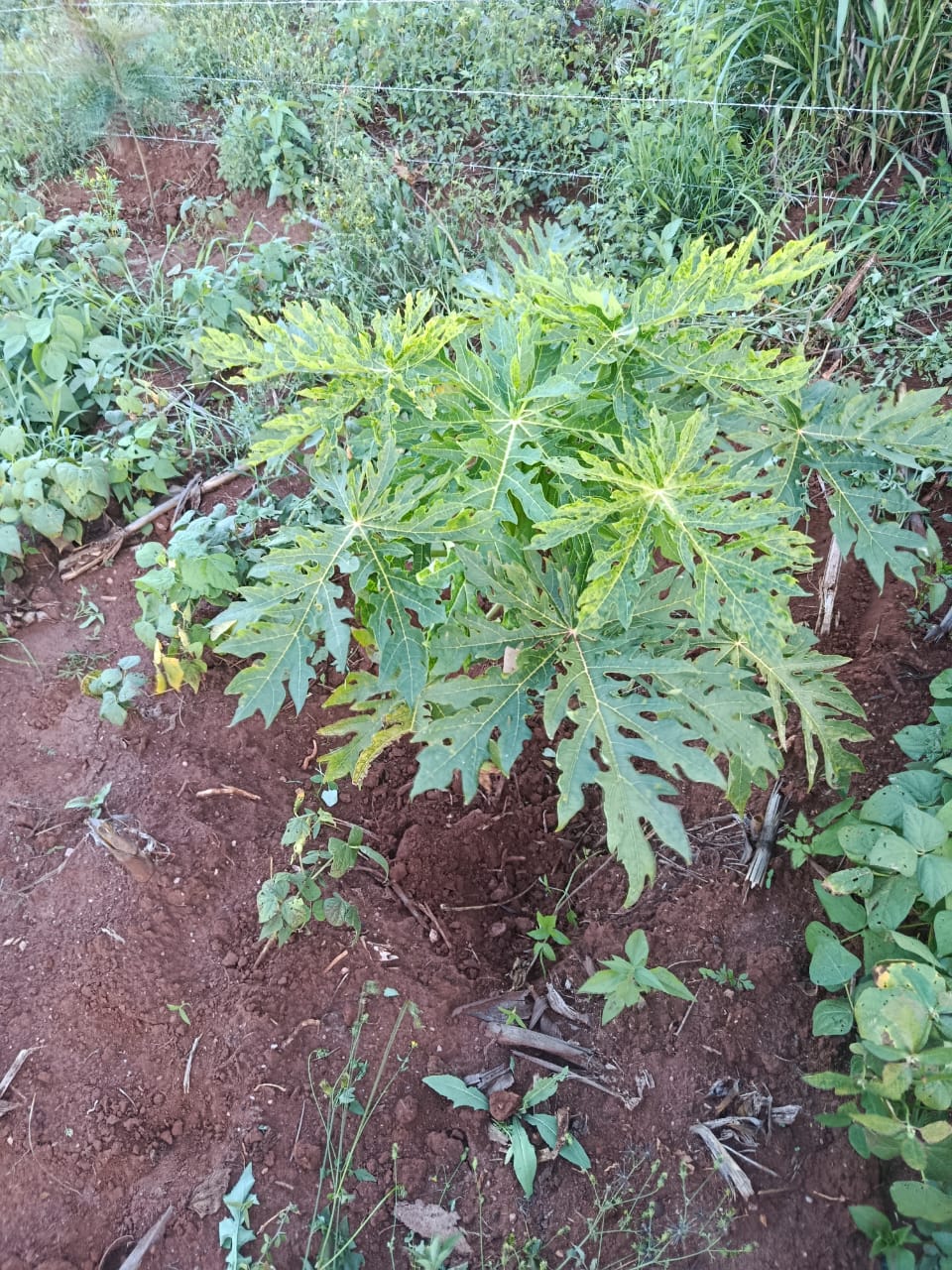
The symptoms in the pawpaw plant above, specifically the yellowing and slight curling/distortion of the leaves, are indicative of a potential nutrient deficiency, water management issue, or more likely, a viral disease like the Papaya Ringspot Virus (PRSV) or Papaya Leaf Curl Virus (PaLCuV).
Diagnosis
- Viral Diseases (Most likely): PRSV and PaLCuV are common, severe issues in papaya cultivation. They cause yellowing (chlorosis), leaf distortion, reduced leaf size, and stunted growth. PaLCuV often presents with vein thickening and a tough, leathery texture of the leaves, which seems consistent with the visual evidence. These viruses are spread by insect vectors like aphids and whiteflies.
- Nutrient Deficiency: Yellowing can also be a sign of a lack of essential nutrients, particularly nitrogen or iron. Nitrogen deficiency often starts in older leaves and moves up, while iron deficiency typically affects younger leaves first.Water Issues: Both overwatering (leading to root rot) and underwatering can cause leaf yellowing and wilting due to plant stress or root damage.
-
- Treatment and Management
- For viral diseases, there are generally no direct cures, so management focuses on prevention and control of spread.
- Remove Infected Plants: Immediately rogue (remove and destroy) any plants showing symptoms to prevent further spread to healthy plants.
- Control Vectors: Manage the populations of aphids and whiteflies (the virus carriers) using appropriate insecticides or botanical options like neem oil or insecticidal soaps.
- Sanitation: Disinfest all agricultural tools with a 10% household bleach solution after use with each plant to avoid mechanical transmission.
- Proper Cultural Practices:
- Ensure the plant is in well-drained soil to avoid waterlogging.
- Use a balanced fertilizer to address potential nutrient deficiencies.
- Avoid planting papaya near other host plants for the virus, such as squash, pumpkin, or cucumber.
No responses yet